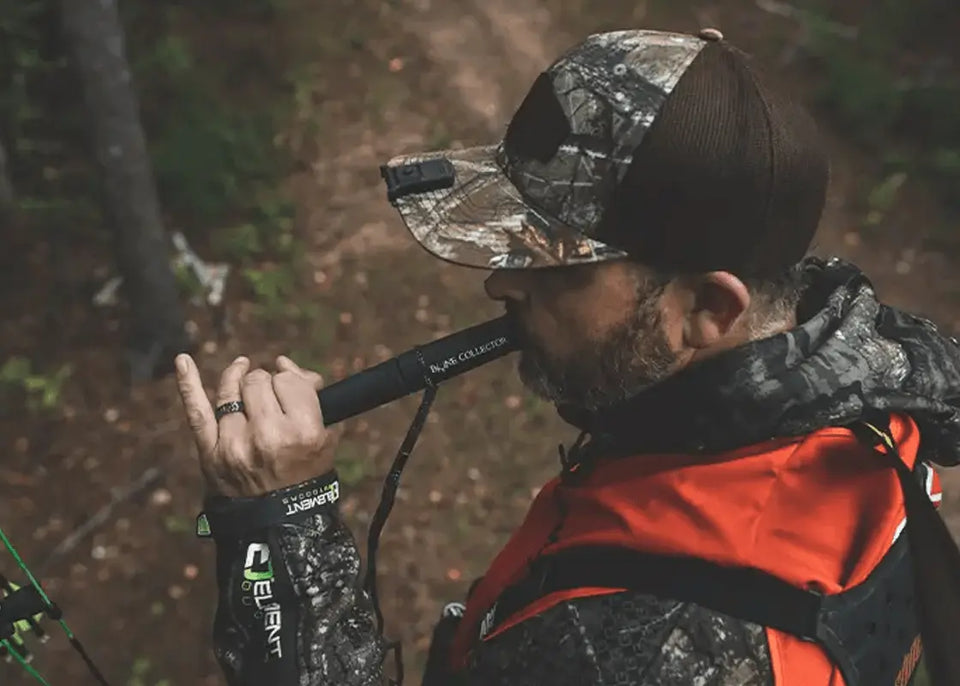
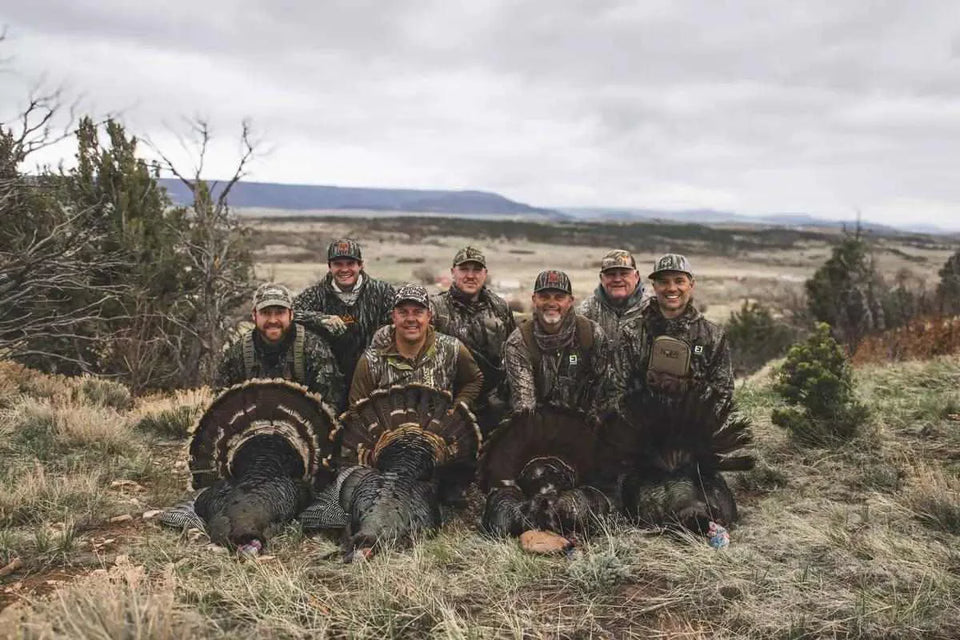
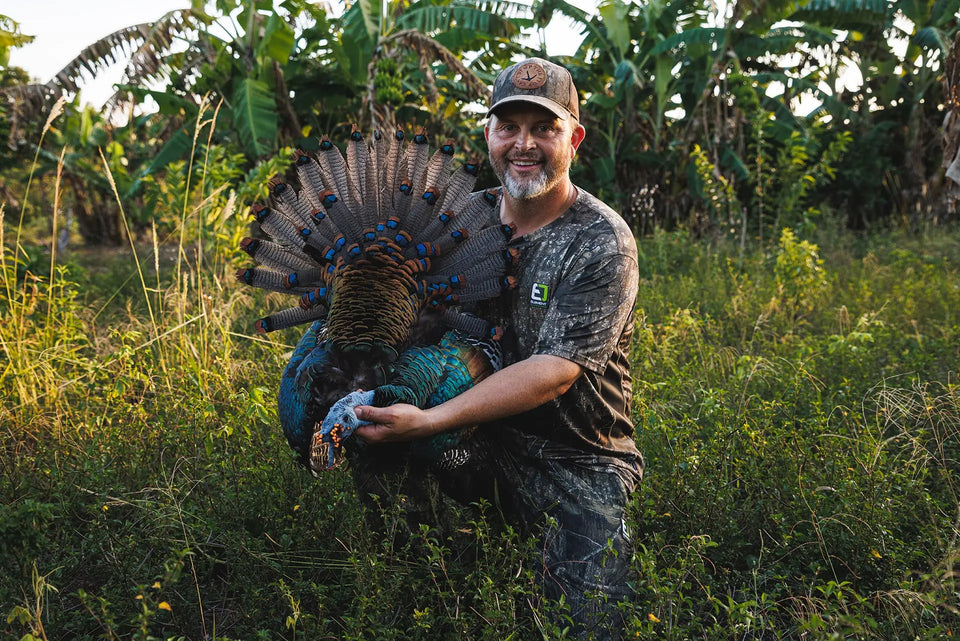
Turkey season is in full swing, but for the Bone Collector, Michael Waddell, it’s never too early to look towards next year’s hunt. In this Backyard Life video, Waddell walks through the strategies he uses to turn his South Georgia property into a whitetail and turkey magnet. From high-protein feed and mineral licks to food plot rotations and prescribed fire, he covers the techniques that have helped him foster healthier deer and turkey populations—and even more successful hunts. And while he’s at it, he makes one thing clear: if you take care of the land, the land takes care of you.
Picking Up the New Exmark
Before Waddell heads out to walk and talk habitats, he makes a stop at County Outdoors in Hamilton, Georgia. It’s grass-cutting weather, and he’s picking up his brand-new Exmark Lazer Z X-Series zero-turn mower.
When you’re managing habitat across multiple acres, equipment matters. Waddell’s new unit boasts Exmark’s oil guard system, which keeps the operating temperature lower and extends oil change intervals up to 500 hours. It also features their signature Adapt Technology, which allows him to adjust the deck angle on the fly depending on grass conditions.
The ergonomics have been redesigned, the body’s been updated, and it’s got new gray wheels that Waddell can’t help but admire.
Sure, his wife’s ready to put him to work mowing, but the real excitement comes after the chores. Once the grass is cut, it’s time to focus on what he loves most: habitat management.

Why Spring Habitat Work Matters
Some hunters spend all their energy focusing on filling their tags during turkey and deer season and let everything else slide. But Waddell doesn’t operate like that. Late winter through early summer is when the real work happens. The nutrition and cover you provide during these months can have a big impact on how deer and turkey use your property later in the year.
And here’s the bonus: everything you do for deer benefits the entire ecosystem. Turkey, quail, rabbits, songbirds, even pollinators—they all thrive. Throw in smart predator control, and you’ve created a balanced, productive environment that supports wildlife year-round.
Food Plot Strategy: Rotation, Timing, and What Actually Works
Waddell’s farm centers around a field he calls “Bull Run”—a food plot that consistently produces his biggest bucks and gobblers come spring. Last year, he drilled standing corn, left sections to grow tall for bedding cover, and surrounded the whole setup with giant milo (a variety called Great Wall that grows nine to ten feet tall). That added cover creates ideal conditions for bedding deer and gives turkeys a place to move, feed, and stay protected.
He’s had especially good luck with forage oats and clover. As he mentions, if you’re a beekeeper, those clover blooms can benefit pollinators too. When summer rolls around, he rotates parts of the field into crops like cowpeas, giving deer something to feed on through the hotter months and sometimes into early fall.
But Waddell is quick to point out there’s no single formula.
You can go different directions with it—try different plantings, adjust your layout, and see what your deer respond to. Even on 20 to 30 acres, he says, you can build something like this that makes a real difference.
Mineral Sites: Why Deer Love Them and How to Set One Up
Waddell uses Big & J’s BB2 and Legit mineral, both of which are formulated with the minerals deer need. Does the mineral directly add size to a buck’s rack? That’s debatable. But what’s undeniable is that deer seek it out, use it regularly, and appear healthier when it’s available.
Here’s how Waddell sets up a mineral site:
- Step 1: Pick a High-Traffic Area: Locate your mineral site near existing food plots, trails, or bedding areas. Deer are more likely to find and use it if it’s already in their travel pattern.
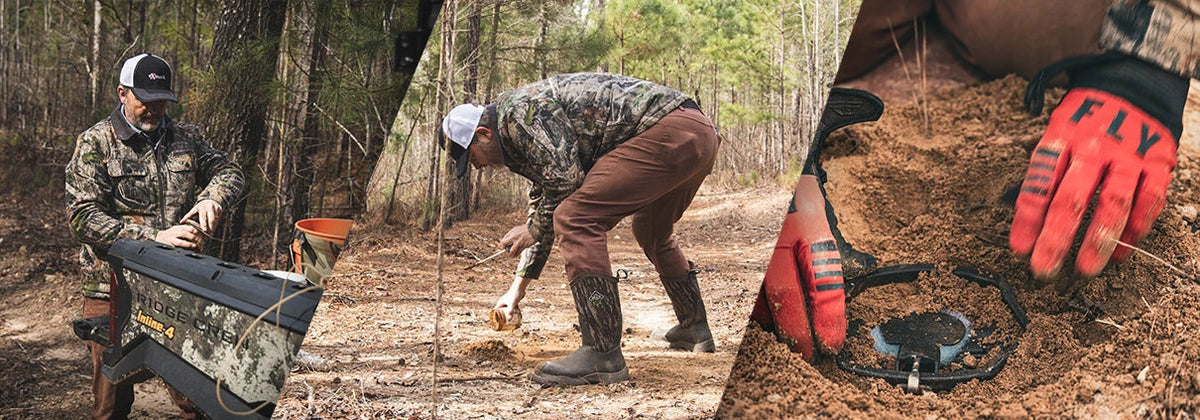
- Step 2: Pour the Mineral Directly on the Ground: No need for a fancy setup. Waddell dumps the entire bag in a spot and lets the deer work it into the soil. As it rains, the mineral dissolves into the dirt, and deer will lick and paw at the saturated soil.
- Step 3: Add Supplemental Feed Nearby: Waddell often drops a bag of Big & J Cotton Crave or a sweet corn mix right next to the mineral. It’s like setting out a full buffet.

Supplemental Feeding
Waddell is a big believer in supplemental feeding, but he’s also careful to remind viewers that regulations vary widely by state. In Georgia, for instance, you can feed deer year-round on private land, but during turkey season, you must stay at least 400 yards away from any protein-based feed. Every state is different, so checking the rules is critical before putting anything out.
Here’s what Waddell uses:
- Big & J Cotton Crave: A cottonseed-based feed that’s extremely high in protein. Waddell notes that it sometimes takes deer a few weeks to start hitting it, but once they do, they hammer it.
- High-Protein Pellets: Standard protein pellets that are particularly effective during late summer and early fall when deer are packing on weight.
- Sweet Corn Mix: More of a candy than a nutrition source, but deer love it. Waddell uses it sparingly, often as an attractant near trail cameras or mineral sites.
Prescribed Fire: A Habitat Multiplier
Every other year, he burns acres of pine stands on his property. The results speak for themselves: neon-green grass that grows waist-high by late spring, suppressed hardwood competition, and exceptional turkey habitat.
Fire has been used as a land management tool for thousands of years. Native Americans burned the landscape regularly, knowing that deer would return to the new growth to forage. That same principle holds true today. A well-executed burn releases nutrients locked in dead vegetation, stimulates native grasses, and creates the open understory structure that deer, turkey, and quail thrive in.
Bedding Areas
Deer need three things to thrive: food, water, and security. Waddell’s farm has plenty of the first two, but he’s intentional about the third. By leaving sections of his food plots unharvested and allowing them to grow tall, he creates thick bedding zones where deer feel safe during daylight hours.
In the standing corn areas, for example, Waddell leaves sections standing. The thick stalks provide wind break and visual cover. When he burns his pine stands, the resulting grass grows dense enough that deer bed in the open understory.

What About the Rest of the Wildlife?
While Waddell’s primary focus is deer and turkey, he’s quick to point out that quality habitat benefits every species on the property. The mineral sites attract raccoons and opossums (which he traps aggressively). The food plots feed rabbits, squirrels, and songbirds. The prescribed burns create brood habitat for quail. Even the pollinators benefit from the clover blooms.
It’s a holistic system. Waddell isn’t managing for one species or one season. He’s creating a balanced ecosystem where everything from bees to bobcats has a role to play.
Frequently Asked Questions About Wildlife Habitat Management
How many acres do you need for a food plot?
You don’t need a huge property to make a real difference. Waddell says even on 20 to 30 acres you can lay out food plots, bedding cover and mineral sites that hold deer and turkey on your land year-round.
When should you do a prescribed burn?
Waddell burns his pine stands in February. Late winter timing gives the new grass and forage time to flush before spring green-up, which sets up strong brood habitat for turkeys and bedding cover for deer through warm season.
What’s the best food plot for deer in the South?
Forage oats and clover are excellent cool-season options, while cow peas and soybeans work well for warm-season plots. Waddell recommends rotating crops to provide year-round nutrition and prevent soil depletion.
Is supplemental feeding legal in my state?
Regulations vary widely. Some states prohibit supplemental feeding entirely, while others allow it with distance restrictions during certain seasons. Always check your state’s game and fish regulations before putting out feed or mineral. In Georgia, for example, you must stay 400 yards away from protein-based deer feed during turkey season.
Do mineral sites actually make antlers bigger?
The science is mixed, but what’s clear is that deer seek out mineral and use it regularly. Whether it directly adds size to a rack is debatable, but providing mineral ensures deer aren’t deficient in key trace elements during antler growth.
Waddell, Michael. “Wildlife Habitat Management With Michael Waddell.” Exmark’s Backyard Life, Exmark, 7 May 2026, https://backyard.exmark.com/outdoor-living/wildlife-habitat-management-with-michael-waddell/. Accessed 12 May 2026.